
What we are building
An infrastructure of belonging, connection and possibility
FAITH-8 transforms retention challenges into long-term organisational advantage through community, career progression and modern employee support infrastructure.
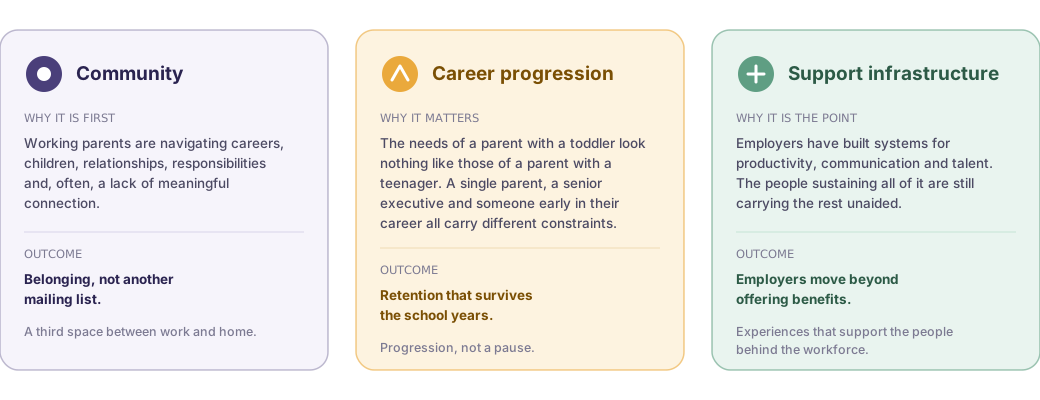
Community
Working parents are navigating careers, children, relationships, responsibilities and, often, a lack of meaningful connection.
That is the load the first part of the infrastructure has to carry. Not information — connection. Parents do not need another place to read about parental leave; they need somewhere to be among people in the same years of life, with the same unglamorous logistics.
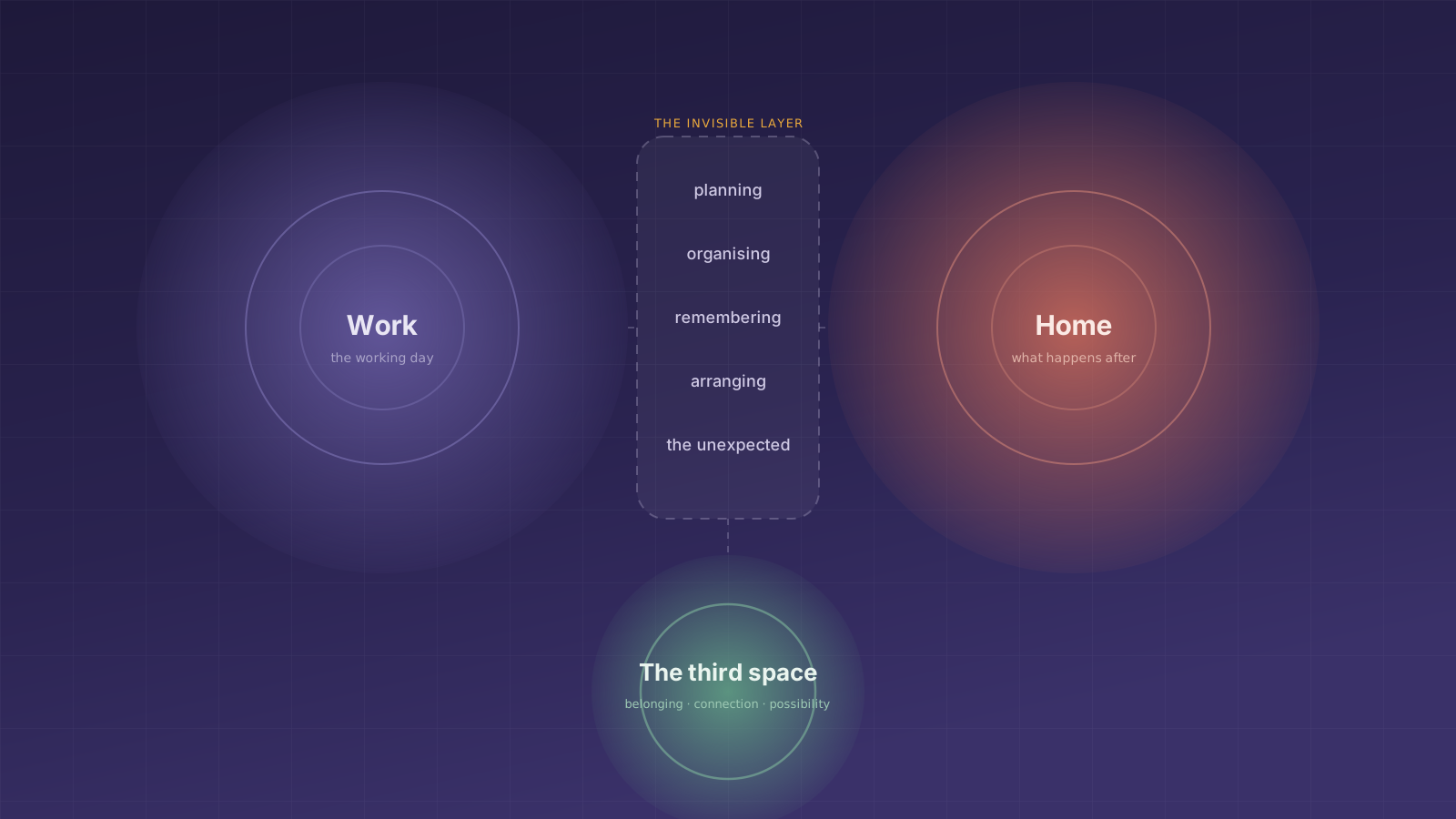
The company's framing is a third space: a place between work and home, distinct from both, that belongs to neither the employer's calendar nor the household's to-do list.
What this part has to avoid
- A mailing list with a community label on it
- A forum where the only posts are from the marketing team
- Anything that requires a parent to find time to attend
Career progression
The parenting experience is not homogeneous. Any progression model that assumes it is will fail most of the people it is meant to serve.
The research found the differences are not marginal:
- The needs of a parent with a two-year-old can look completely different from those of a parent with a teenager
- A single parent faces an entirely different set of constraints from a co-parenting household
- A senior executive carries different pressures from someone early in their career
- Parents living with disability, caring responsibilities, financial pressures or isolation are usually absent from the design altogether
Career progression is therefore treated as part of the same infrastructure as community — because the reason people leave is rarely the work itself.
The outcome it is meant to produce
Retention that survives the school years. Not a return-to-work programme that ends at month six, but progression that continues through the years when parenting is most demanding.
Why the detail matters
Bracketed assumptions — “parents” as a single category, “flexibility” as a single answer — are what make corporate parental support feel like a form to be completed.
The company's stated approach is that the complexity is the opportunity, not the obstacle.
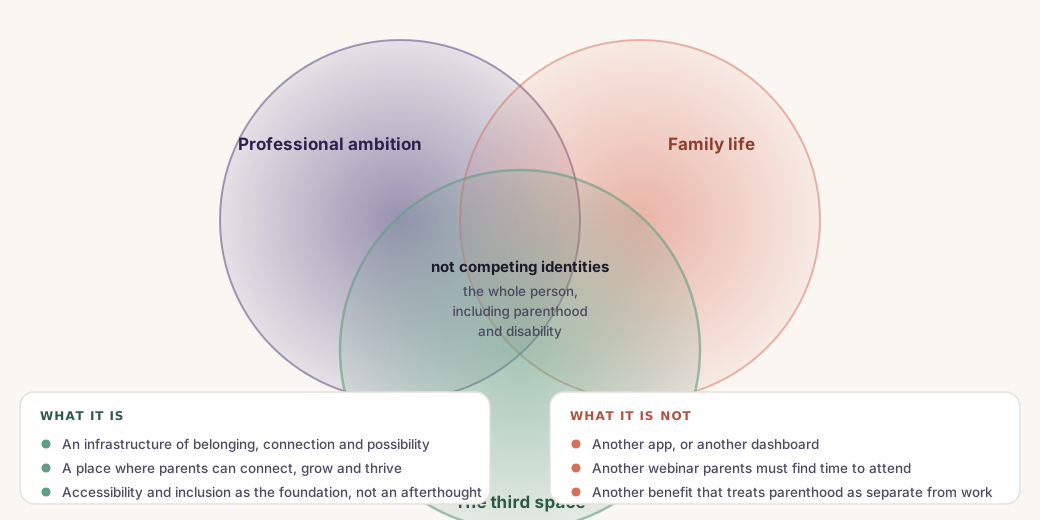
Ambition and family life are not competing identities. Progression design either treats them as one life or it quietly asks parents to choose.
Modern employee support infrastructure
We have spent years building infrastructure for businesses: systems for productivity, communication and talent. But what happens to the people sustaining all of it, when the working day ends?
This is the part aimed squarely at employers. The goal is to move beyond offering benefits towards creating experiences that support the people behind the workforce — with the practical shape still being worked out with HR and People leaders.
The design constraints we are holding to
- Practical, not programmatic — it has to meet people where real life happens
- Accessibility and inclusion built into the foundation, not retrofitted
- Operable by a real People team, not a full-time programme office
- Compatible with the systems an employer already runs
The company states that the future of work requires more than flexibility. It requires infrastructure that recognises the whole person, including the different realities of parenthood and disability.
Where this part stands
In research. The second half of the listening phase is with HR and People leaders, to establish what organisations actually need, what they value, and what they are prepared to support.
Where this is up to
A stage, not a launch
Stated plainly, because it changes what a useful conversation with us looks like.
If you are evaluating vendors, this is not one yet. If you want to shape what gets built, this is the stage where that is still possible.
In one paragraph
What FAITH-8 exists to do
A third space. An infrastructure of belonging, connection and possibility for working parents.
A place where professional ambition and family life are not treated as competing identities. Where accessibility and inclusion are part of the foundation, not an afterthought. Where employers can move beyond offering benefits towards creating experiences that support the people behind their workforce. Where parents can connect, grow and thrive.
Parents thrive. Children thrive. Workplaces thrive.
Help shape it
Parents and employers are both part of the research. Tell us which you are and what would actually help.