
For HR & People leaders
Retention is where the invisible layer shows up on a spreadsheet
FAITH-8 is speaking with HR and People leaders now, before anything is built, to understand what organisations actually need, what they value, and what they are prepared to support.
The problem, from your side
You have built the systems. The pressure is still outside them.
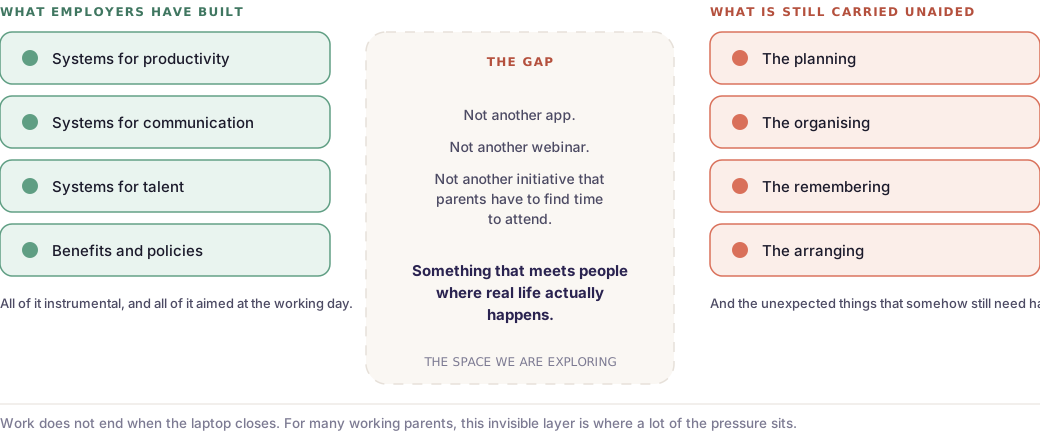
Employers have spent years building infrastructure for business — systems for productivity, for communication, for talent. What happens to the people sustaining all of it, when the working day ends?
Working parents are navigating careers, children, relationships and responsibilities, and the load that does not fit any of your systems is precisely the load most likely to end in a resignation. It rarely arrives as a complaint. It arrives as a resignation letter with a date that coincides with a school holiday.
The company's position is that this is not solved by another benefit. It is solved by infrastructure that recognises the whole person — including the different realities of parenthood and disability.
What we are testing with employers
Three questions we are asking People teams
What do you actually need?
Not what a benefits brochure says you should want. What would change the retention picture in your organisation, for the specific parent populations you employ.
What do you value?
Where does this sit against everything else competing for the same budget and the same People-team attention — and what would make it worth prioritising?
What will you support?
The honest answer, including procurement reality, operational capacity and the constraints that a parent-side research process would never surface.
These are the questions the company states it is putting to HR and People leaders. Disagreeing with the framing is as useful to us as answering it.
Design partners
Join before there is a product to buy
A design partner is an employer who helps shape what gets built, in exchange for access to it early and influence over what it does.
An initial conversation
Your parent populations, the retention patterns you see, and what you have already tried that did not work.
Ongoing input
Reviewing what we are working on as it takes shape, and telling us when it is wrong for a real organisation.
Early access
First access to whatever is built, on terms agreed with you rather than announced to you.
What a design partner is not
- A logo on a website
- A commitment to purchase
- A pilot of something already finished
- An announcement you have to manage internally
What you get
- Influence over the design while it is still changeable
- Research findings relevant to your own parent populations
- Early access on agreed terms
- A direct line to the founder, not an account manager
Wider context
Childcare is workforce infrastructure
The company amplifies this argument rather than claiming it. Chambers of commerce, economic development bodies and employers across the United States and the UK are increasingly treating childcare as infrastructure rather than as a family matter — because the workforce data says so.
FAITH-8's contribution is on the retention side of that argument: if childcare and parenting logistics are infrastructure, then the support built around them has to be infrastructure too — not a benefit buried three clicks into an HR portal.
Questions
Before you get in touch
Tell us what would actually move the number
Fifteen minutes of your retention reality is more useful to us than a survey.